

RAINBOW COALITION: WHY HON. RUFUS BATURE’S POSITION SHOULD NOT BE MISREPRESENTED
A response to Shabul Mazadu
By~ Victor S. Gutul
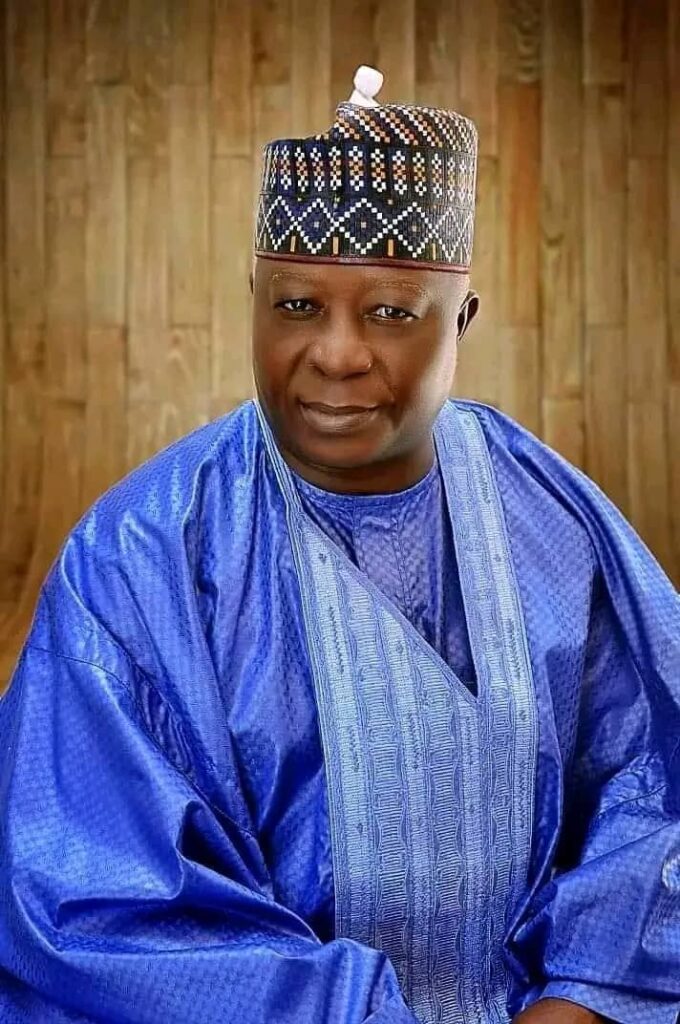
Political discussions are healthy for democracy, particularly within a political party as diverse as the All Progressives Congress (APC). However, while disagreements are inevitable, such discussions must be guided by fairness, context and a proper understanding of party principles. Unfortunately, the attempt by Shabul Mazadu to interpret the recent remarks of the Plateau State APC Chairman, Hon. Rufus Bature, appears to stretch his words beyond their intended meaning.
First, it is important to appreciate that Hon. Rufus Bature did not speak against individuals who belong to the Rainbow Coalition, neither did he suggest that supporting President Bola Ahmed Tinubu was an offence. Rather, his statement was a reminder that political alliances, no matter how broad or influential, must recognise the political platform under which their members seek to operate.
There is a fundamental difference between supporting the President of the Federal Republic of Nigeria and subscribing to the overall political structure and objectives of the APC. While the two may complement each other, they are not necessarily the same thing.
Supporting Tinubu is commendable, but party loyalty must go beyond presidential support.
President Bola Ahmed Tinubu is undoubtedly the leader of the APC and the party’s foremost political figure. His contributions to the formation, growth and sustenance of the party are well documented. However, the APC is not an individual organisation. It is a political institution with a constitution, leadership structure, elected representatives, stakeholders and members across the federation.
To suggest that APC is exclusively Tinubu, and that Tinubu alone defines the party, is to overlook the contributions of thousands of Nigerians who have invested their time, resources and political fortunes in building the party.
The President is the leader of the party, but the party itself remains an institution governed by established principles and collective decisions.
This is where Hon. Bature’s position deserves a fair interpretation.
When he stated that any Rainbow Coalition that does not do APC is not part of the party, he was making a distinction between political association and party commitment. In simple terms, belonging to a political coalition does not automatically confer membership or recognition within another political organisation. There must be an understanding of the rules, values and political direction of the party one seeks to identify with.
It is therefore misleading to interpret his statement as an attempt to undermine President Tinubu or punish individuals for supporting his administration.
THE PRESIDENTIAL ELECTION IS NOT THE ONLY MEASURE OF PARTY LOYALTY

One of the weaknesses in Shabul Mazadu’s argument is the suggestion that supporting President Tinubu alone should be sufficient to establish one’s loyalty to the APC, irrespective of the party’s other candidates.
This position raises an important question: What happens to the other candidates who emerge through the party’s recognised electoral processes?
Does supporting the presidential candidate automatically mean that one has fulfilled every political responsibility within the party?
Political parties are built around collective interests. They produce candidates for various elective positions, from the presidency to the National Assembly, governorship, state assemblies and local government councils. These candidates are expected to enjoy the support of party members as part of the collective political arrangement.
One cannot reasonably celebrate the strength of a political party at the national level while deliberately weakening its structures at the state or grassroots levels.
If every member were allowed to decide which candidates deserve support based solely on personal preference, the party would gradually lose its collective identity and become an association of individual political interests.
That is certainly not what any responsible party leadership should encourage.
BATURE’S RESPONSIBILITY AS STATE PARTY CHAIRMAN
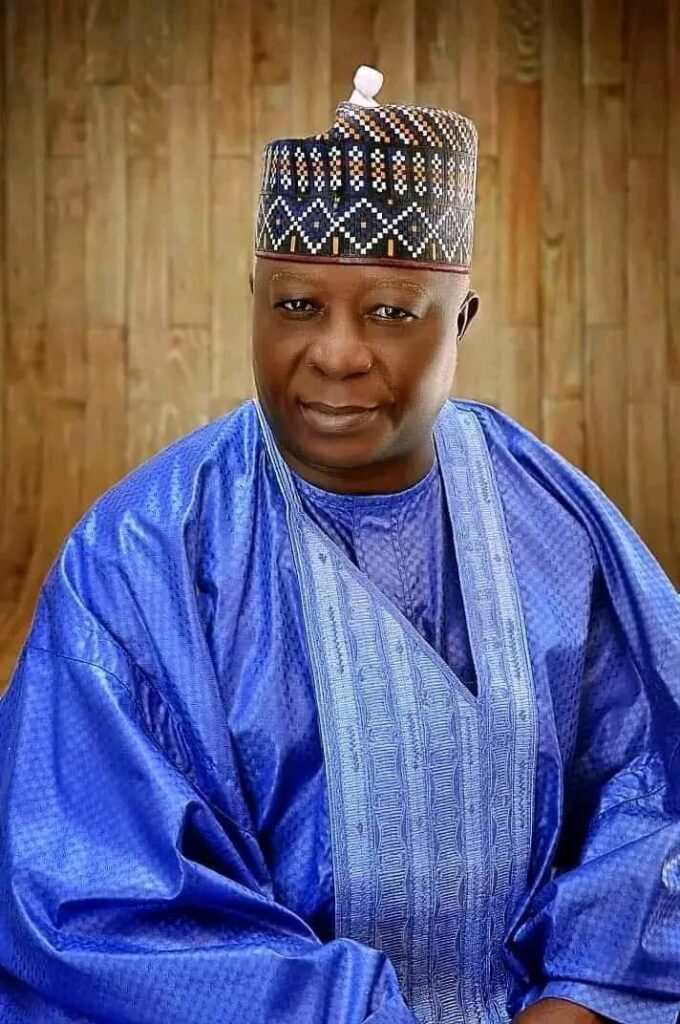
Hon. Rufus Bature occupies a position that demands responsibility, fairness and political maturity. As the Plateau State APC Chairman, he is expected to protect the interests of the party, maintain internal discipline, promote unity and ensure that members operate within the party’s established framework.
His responsibility is not limited to accommodating every political interest. It also involves ensuring that such interests do not undermine the party’s cohesion.
The Chairman must be able to welcome new political relationships while reminding everyone that the APC is bigger than individual ambitions and temporary political arrangements.
This is not hostility. It is leadership.
Indeed, the fact that the Chairman engaged with the leadership of the Tinubu/Mutfwang Campaign Organisation should be seen as an opportunity for dialogue and political understanding, rather than an avenue to manufacture a disagreement between him and the Rainbow Coalition.
Political accommodation does not mean abandoning party principles. Equally, defending party principles does not mean shutting the door against people who genuinely wish to work with the APC.
Both positions can coexist.
RAINBOW COALITION AND THE NEED FOR POLITICAL CLARITY
There is nothing inherently wrong with political coalitions. They are part of democratic politics and can provide opportunities for wider consultation, mobilisation and cooperation.
However, every coalition must understand its relationship with the political party it seeks to support.
If the Rainbow Coalition has resolved to support President Tinubu and Governor Caleb Mutfwang, that position should be welcomed as a political contribution. But it should also recognise that the APC has its own leadership, structures and internal arrangements.
Supporting a candidate is one thing; determining how a political party should operate is another.
The coalition should not interpret every call for party discipline as an attack on its existence. Likewise, the APC leadership should not regard every independent political association as a threat.
What Plateau State needs at this moment is constructive engagement, not unnecessary political hostility.
PARTY UNITY MUST BE BUILT ON MUTUAL RESPECT
The APC in Plateau State has a responsibility to accommodate different political interests, especially as the party prepares for the challenges ahead. But unity cannot be achieved by allowing competing interests to disregard one another.
Those who support President Tinubu deserve recognition for their commitment. Those who support Governor Mutfwang should also understand the importance of party cohesion. And those who occupy leadership positions must be given the necessary respect to discharge their responsibilities.
Hon. Rufus Bature should not be judged by isolated interpretations of his remarks but by the broader responsibility of his office and his commitment to keeping the party together.
There is no need to turn a statement about party identity into a political confrontation. Neither should anyone attempt to create the impression that the APC Chairman is opposed to President Tinubu simply because he insists on party loyalty.
You cannot build a strong political party by recognising its leadership only when their positions favour your interests.
The APC belongs to its members, and its strength lies in its ability to accommodate different interests without sacrificing its identity.
Hon. Rufus Bature’s position should therefore be understood within this context: the doors of the APC can remain open to political allies, but the party’s identity, structures and responsibilities must be respected.
After all, political alliances may come and go, but a political party must have the discipline and institutional strength to survive beyond individual elections and political arrangements.
The issue is not whether one supports Tinubu. The issue is whether that support can be translated into a collective commitment to the APC as a political institution.
That is the distinction Shabul Mazadu’s argument appears to overlook.
And that is why Hon. Rufus Bature deserves a fair hearing rather than a deliberate attempt to place meanings into his words that he did not expressly communicate.